Bring the History of the American Civil War to Life

Updated: Dec 8, 2025

Too often, students can list the five W’s of the American Civil War: who, what, when, where, and why, but still struggle to truly understand the people who lived through it. They can tell you that Abraham Lincoln was the 16th president or that the Civil War lasted from 1861 to 1865, but they can’t always imagine what daily life was like for a soldier, a nurse, or an enslaved person during that time.
That’s why bringing history to life matters. When students experience the past through storytelling, geography, and multiple perspectives, history stops being a list of dates and rote memorization and becomes something vivid and human.
My American Civil War Virtual Field Trips were created with this goal in mind. I designed these ready-to-go experiences to help students see, hear, and feel the history of this period in our nation’s story.
Traditional lessons tend to focus on memorization of major battles, key dates, and political leaders. But if we stop there, students miss the human side of history. By shifting focus from memorizing facts to making connections, we help students understand why events mattered and how they shaped the people involved.
The Civil War Virtual Field Trips I've created do exactly that. Instead of just reading about Antietam or Vicksburg, students visit these sites virtually, exploring the terrain, examining photographs, and considering the emotions and decisions of those who were there.
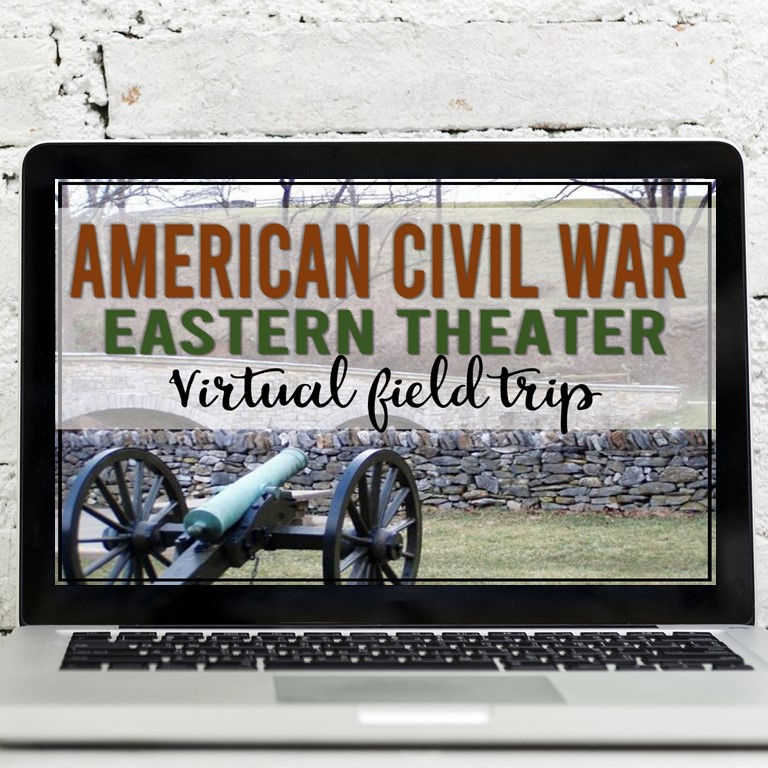
This virtual field trip allows students to journey through famous battlefields such as Gettysburg, Fredericksburg, and Petersburg. Through interactive slides and Google Earth views, they can visualize the dense forests, rolling hills, and steep ridges where soldiers fought and lived.

But this Eastern Theater lesson goes beyond the battlefield. Students also explore the lives of African Americans, Native Americans, and women during the war.
They learn how civilians supported soldiers, how photographers captured the reality of combat, and how the war’s impact rippled through families and communities.
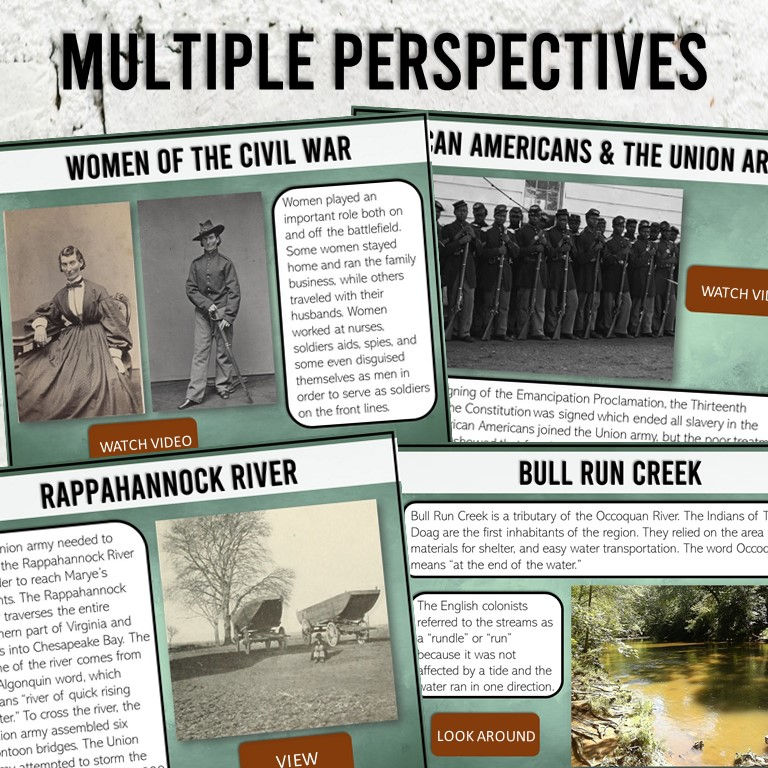
By integrating these multiple perspectives, students begin to see the Civil War as more than a military conflict. It was a national turning point that shaped every aspect of American life.

Many history books focus on the battles in Virginia and the Eastern states, but this virtual field for the Western Theater introduces students to the equally critical campaigns in Tennessee, Mississippi, and Georgia.
In this virtual field trip, students examine key moments like the Siege of Vicksburg and Sherman’s March to the Sea. They explore how geography, from wide rivers to rugged hills, influenced military strategy and outcomes.

The Western Theater trip also highlights lesser-known figures such as Susie King Taylor, an African American nurse and teacher, and the experiences of African Americans seeking refuge in Union camps. By studying their stories, students grasp how freedom, courage, and resilience defined this era.

Using virtual field trips in the classroom lets students step into the story. Teachers can pause at specific locations, ask reflection questions, and encourage students to think critically about history. Activities like these transform history from something students memorize to something they experience.
You can find the discounted bundle that includes virtual field trips focusing on both the Eastern and Western Theaters here: American Civil War Virtual Field Trip Bundle


Comments